 Take Home Pay
Take Home Pay
Take Home Pay
The NHS MARS Calculator estimates your severance payout under the Mutually Agreed Resignation Scheme for the 2026/27 financial year. MARS allows eligible NHS staff to volunteer to resign in exchange for a lump-sum payment calculated at half a month's basic salary per completed year of continuous NHS service, capped at 12 months' salary and an absolute ceiling of £80,000. The first £30,000 of a qualifying MARS payment is exempt from income tax under HMRC rules (ITEPA 2003, s.403). Enter your annual basic salary and completed years of NHS service above to see your estimated gross and net payout.
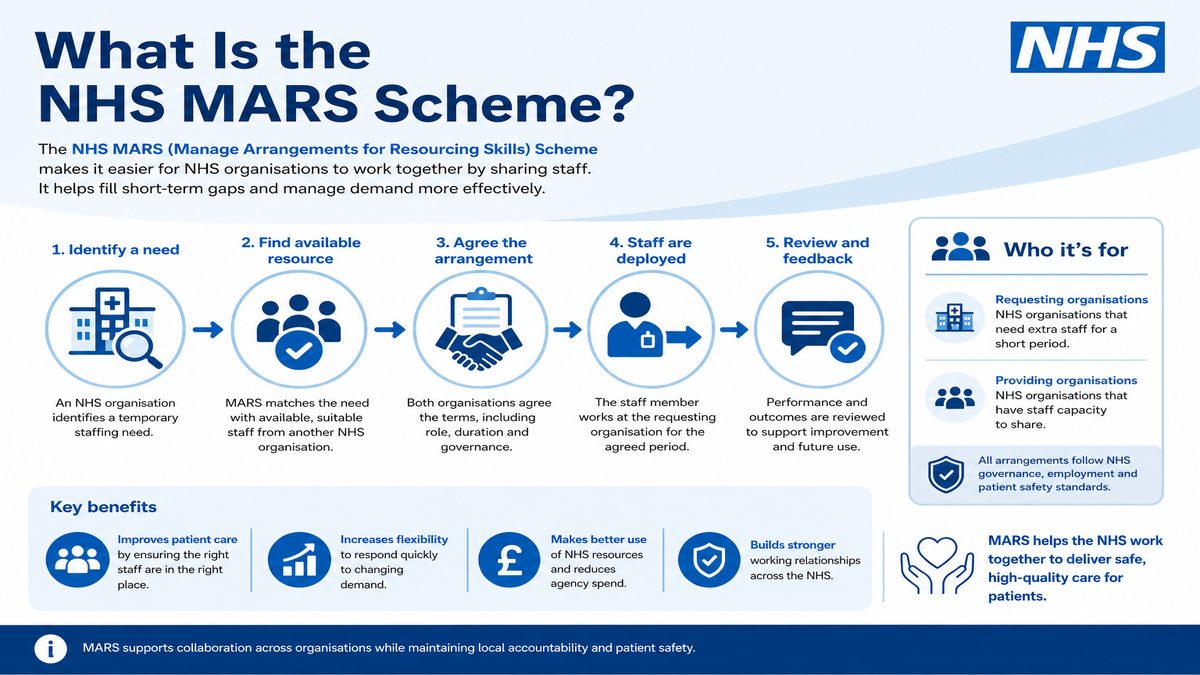
MARS stands for Mutually Agreed Resignation Scheme. It is a voluntary severance arrangement governed by NHS England that allows NHS trusts, integrated care boards (ICBs), and commissioning support units to offer exit packages to employees whose posts are no longer required. Under MARS, you agree to resign voluntarily in exchange for a negotiated lump sum. You give up your statutory redundancy rights as part of this agreement.
MARS is not redundancy. It operates under Paragraph 20.18 of the NHS Terms and Conditions of Service Handbook, not under Section 16 (which governs NHS redundancy). Each MARS scheme requires prior approval from NHS England and must operate within a maximum window of 3 months per round. Not all trusts run MARS at all times — availability depends on local workforce restructuring needs.
The NHS MARS scheme is active across acute trusts, ICBs, and NHS England regional teams in 2026. NHS Employers publish the national model MARS framework, and each trust adapts it to its own circumstances.
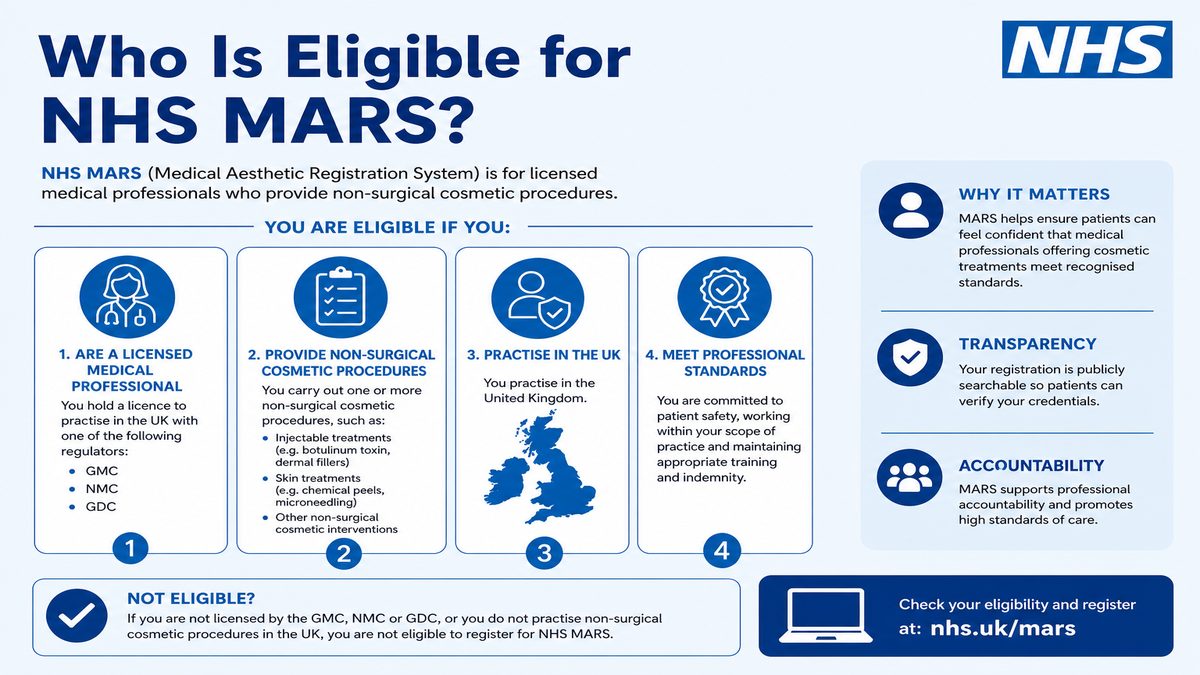
To qualify for MARS under the national framework, you must meet all of the following conditions:
You will not normally be eligible if you:
Each trust sets its own eligibility refinements within the national framework. Your HR department will confirm whether your specific role qualifies before processing any application.
The standard national MARS formula is:
MARS Payment = (Basic Monthly Salary ÷ 2) × Completed Years of Continuous Service
This formula is subject to two hard caps:
Parameter | Limit |
Maximum months of salary compensated | 12 months |
Maximum total MARS payment | £80,000 |
Salary cap applied to calculation | £80,000 (pro-rata for part-time workers) |
For example, an NHS employee on a £38,000 basic salary with 10 years of continuous service would receive:
A higher earner on £70,000 with 20 years of service would hit the 12-month cap:
Part-time workers have the £80,000 salary cap applied pro-rata to their contracted hours. If you work 0.6 WTE, the salary figure used in the calculation is capped at £48,000 (0.6 × £80,000).
The first £30,000 of a qualifying MARS termination payment is exempt from income tax under ITEPA 2003, section 403. National Insurance contributions do not apply to the qualifying portion. Any amount above £30,000 is taxed at your marginal income tax rate.
Payment Portion | Tax Rate (2026/27) | National Insurance |
First £30,000 | 0% (tax free) | 0% |
£30,001 – £50,270 | 20% (basic rate) | 0% |
£50,271 – £125,140 | 40% (higher rate) | 0% |
Above £125,140 | 45% (additional rate) | 0% |
Your employer deducts income tax at source via PAYE on the taxable portion. If your total MARS payment falls within the £30,000 exemption, you receive the full amount with no deductions.
Important: If your MARS package includes pay in lieu of notice (PILON), that portion is fully taxable and does not benefit from the £30,000 exemption. PILON is treated as earnings, not as a termination payment.
MARS and redundancy are separate exit routes with different legal bases and consequences.
Feature | MARS | NHS Redundancy (Section 16) |
Legal basis | Voluntary agreement (Paragraph 20.18) | Employment Rights Act 1996 (Section 16, AfC Handbook) |
Nature of exit | Voluntary resignation | Dismissal by reason of redundancy |
Statutory redundancy rights | Waived | Fully retained |
Qualifying service | 12 months minimum | 24 months for statutory redundancy |
Payment formula | ½ month per year, capped at 12 months / £80,000 | 1 month per year, capped at 24 months / £80,000 |
Tax treatment | First £30,000 tax free | First £30,000 tax free |
Clawback on return to NHS | Yes — typically 6 to 24 months | Varies by scheme; voluntary redundancy may include clawback |
Right to appeal | None | Statutory consultation and appeal rights apply |
NHS redundancy pay is generally more generous than MARS — one full month per year of reckonable service versus half a month under MARS. Unions including Managers in Partnership (MiP) generally advise staff to explore redundancy rights before accepting MARS, particularly when a formal redundancy situation exists or is foreseeable.
MARS is classified as a voluntary resignation for NHS Pension purposes (source: NHS BSA knowledge base). Accepting MARS does not automatically trigger pension payment, and it does not damage your accrued pension benefits. Your options depend on your age and scheme section:
NHS Pension Scheme Section | Normal Pension Age | Early Access |
1995 Section | 60 | From age 55 with actuarial reduction |
2008 Section | 65 | From age 55 with actuarial reduction |
2015 Section | State Pension Age (currently 67) | From age 55 with actuarial reduction |
If you leave under MARS before your Normal Pension Age, you can either defer your pension (no penalty, payable at Normal Pension Age) or draw it early with an actuarial reduction — typically around 5% per year in the 2015 scheme.
Some trusts offer to cover pension strain costs as part of a MARS package, but this is not standard. Pension strain costs are borne by the employer and can influence whether your trust approves your MARS application in the first place. Always request a pension forecast from the NHS BSA before making a decision.
Every MARS settlement agreement includes a clawback clause. If you return to any NHS-funded role within the restricted period, you must repay some or all of your MARS lump sum.
The restricted period varies by trust but is typically 6 to 24 months. "NHS-funded role" is defined broadly and includes:
This is the most debated aspect of MARS on NHS staff forums. The breadth of the definition means that returning to a role at a GP practice holding an NHS contract, an ICS-funded programme, or a subcontracted NHS service can trigger repayment. Read your settlement agreement's clawback clause carefully before signing.
Step 1 — Expression of Interest. Your trust opens a MARS window (maximum 3 months). You submit a formal expression of interest indicating you want to be considered.
Step 2 — Business Case Assessment. HR and your line manager assess whether releasing your post creates a genuine workforce benefit. MARS cannot be used to manage poor performance or disciplinary cases.
Step 3 — NHS England Approval. The trust submits the proposed exit package to NHS England for approval. This can take several weeks.
Step 4 — Indicative Offer. If approved, HR provides an indicative MARS calculation showing your proposed payment. Request this in writing. Use this calculator to verify the figures independently.
Step 5 — Settlement Agreement and Exit. You sign a settlement agreement confirming your resignation and the payment terms. Once signed, you cannot normally reverse the decision. Your notice period begins, and the lump sum is paid on or shortly after your termination date.
You can withdraw from the process at any point before signing the settlement agreement, without prejudice to your continued employment.
MARS may be suitable if you:
MARS may not be suitable if you:
Always seek independent legal advice before signing a MARS settlement agreement. Most trusts require you to do so as a condition of the agreement.
The maximum MARS payment is £80,000 per individual, as specified by NHS England's national MARS framework and HM Treasury's delegated authority conditions. The standard formula (½ month per year of service, capped at 12 months) means most staff receive significantly less.
No. There is no single centralised NHS MARS calculator on gov.uk. NHS Employers publish the policy framework, and each trust uses its own HR model to produce indicative calculations. Your trust's HR team must provide a written indicative calculation before you commit to any offer.
The payment formula is set by the national framework and your trust's local scheme rules. There is limited scope to negotiate the core calculation. However, you may be able to negotiate additional elements such as payment in lieu of untaken annual leave or the treatment of pension strain costs.
You have no statutory right to appeal a rejected MARS application. The decision rests with your trust and NHS England. Your employment continues unchanged, and there is no prejudice to your position.
Accepting MARS may affect your eligibility for Universal Credit or Jobseeker's Allowance during the period covered by your severance payment. The Department for Work and Pensions may treat the lump sum as capital. Seek advice from Citizens Advice or a welfare rights adviser before accepting.
NHS bank work and agency work for NHS-funded services fall within the clawback definition at most trusts. If you take on bank shifts within the restricted period, you may be required to repay the full MARS payment. Check your settlement agreement's specific wording.
The full process — from expression of interest to payment — typically takes 8 to 16 weeks, depending on NHS England approval timelines and your notice period.